
Dr. Philip McMillan, John McMillan
On June 2, 2026, a French biostatistician named Christine Cotton left the world on her own terms, and most of the people she had spent years trying to warn never learned her name. That is the quiet tragedy at the center of her story. She was not a fringe outsider. She was a professional who had spent her working life inside the machinery of pharmaceutical research, and when she finally raised her hand to say that something was wrong, the response was not a debate. It was silence, followed by erasure.
Her credentials are worth pausing on, because they change how her warning should be read. Cotton spent close to 25 years in pharmaceutical research. She ran her own contract research organization. She designed trials, analyzed them, and audited their compliance. Across her career she reviewed hundreds of studies. Here was someone who knew, in fine detail, how a trial is supposed to behave and where the weak joints in the data tend to hide. So when a person with that background looks at the COVID-19 vaccine trial record and concludes that something does not add up, the honest reaction is not to wave her off, but to follow her into the data and ask what, exactly, she saw.
What She Saw in the Data
What she saw began with manufacturing. Cotton drew a sharp line between what the industry calls Process 1 and Process 2. Process 1 is the small batch made for the clinical trial. Process 2 is the industrial flood, the millions of doses produced at a scale the trial never tested. Her argument was simple and, on its face, hard to fault: if you change how you make the product, the checks applied to the first version should apply to the second. The regulators answered that manufacturing changes are routine and that they had found no particular problem. She was not convinced, and neither were some of the engineers who understand how products reach market. Multiplying a batch a hundredfold is not the same as following the recipe once, and the larger run needs to be rechecked on its own terms.
Her concerns widened from there into a list of seven. The follow-up window was too short to claim long-term safety, which is less an accusation than a plain fact, since long-term data cannot exist in the short term. She suspected that large numbers of cases were never confirmed by PCR. She questioned whether the trial had been conducted consistently with its own protocols. She flagged the thin evidence that the shots prevented infection and transmission, a point that tracks with basic immunology: a jab in the arm struggles to raise the mucosal defenses in the nose and throat, which is exactly where a respiratory virus lands. And she pointed to the sparse data on pregnant women, the immunocompromised, and other high-risk groups. Most of these are not exotic complaints. They are the kind of straightforward questions a careful analyst is paid to ask.
The fourth concern deserves its own spotlight, because it describes a door that was closed and can never be reopened. In the original trial, the placebo group, the people who had received saltwater rather than vaccine, were later offered the real thing. The reasoning was that the product looked so safe and so effective that withholding it would be unethical. Maybe so. But the moment that happened, the clean comparison between the vaccinated and the unvaccinated dissolved. There was no longer an untouched control group to follow across the years, and the long-term answer the trial was built to deliver became, in a stroke, impossible to collect.
The Standard We Apply to Critics
This is where the story stops being only about one vaccine and becomes about how science treats the people who question it. There is a familiar trap in which a critic raises five points, one turns out to be shaky, and the scientific community uses that single weak point to discard the other four. Apply the same standard to the official messaging, to the promise of two doses, then three, then four, and the public would have been entitled to write off the experts entirely. Dr. Philip McMillan, who assembled Cotton’s story into a public reflection, put the principle plainly: “You don’t have to agree with someone, but when you see someone risk it all for the sake of a point, you must at minimum take them seriously.” Leeway, in other words, has to run in both directions, or it is not leeway at all.
None of this means the vaccine should never have existed. The more defensible reading is that the science supported a narrow, targeted rollout to the high-risk people who had not yet been exposed: the older, the obese, those carrying serious comorbidities. We knew who they were. Had the effort stayed there, the questions Cotton raised might have stayed quiet too. By broadening the program to nearly everyone, the campaign put its weaknesses on display and handed the public a vast natural comparison group: the unvaccinated, who by and large were fine. That did real damage to trust, and trust behaves like glass. Once it shatters, you cannot press the pieces back together.
Trust, and How It Breaks
The evidence of that broken trust is now impossible to ignore. A post celebrating COVID-19 vaccines, after roughly eight billion doses, as among the most tested and safest interventions in history drew hundreds of thousands of views within days. Scroll the replies and the mood is overwhelmingly hostile: comment after comment, each gathering its own pile of agreement. A profession can dismiss that as noise, or it can read it as a verdict. The public is the jury that has to believe you, and right now a great many of them do not.
Cotton’s own conclusion, drawn from her reading of the data rather than from any regulator’s sign-off, was unsparing. “You are administered a product for which there were absolutely no results, neither of efficacy nor of tolerance,” she wrote in her final message. Regulators reject that characterization, and in the official record it remains her analysis: contested and unproven. Yet she believed it strongly enough to take her case to court, and to carry it to the end of her life.
What Is Owed
There is a harder thread running underneath all of this, and it asks for gentleness. In her last words Cotton described more than a year of relentless pain: burning sensations down her legs and back, a parade of specialists and medications that brought no relief. Whether that suffering came from infection, from a vaccine, or from some cruel combination of the two, the picture is one that thousands of people now live inside, and medicine has too few answers for any of them. They should not be judged. They should be helped. That so many feel abandoned to their pain is a failure on the part of science, not a verdict on the patients.
So what is owed to a woman like Christine Cotton? Not automatic agreement. Her warnings occupy a range of likelihoods, some probably sound, a few beyond firm proof, all of them deserving a hearing rather than a blacklist. What is owed is the willingness to look again when a serious person, at great personal cost, asks us to. Staying silent is easy, and most of us have done it. The braver thing, and the rarer one, is to speak. The least the rest of us can do is take the brave seriously.


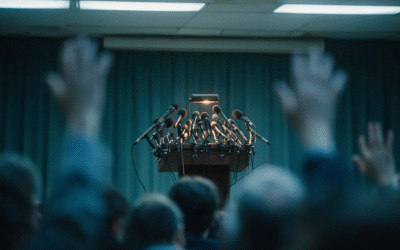
As a specialist in her field, Christine Cotton’s studies, warnings and conclusions, should have been taken seriously by the Vaccine developers and their administrators, but they were not. Who knows if there’s a correlation between the side effects and subsequent mortalities following the immense take-up of the fiercely mandated COVID-19 vaccine?
If anyone knew the answer, it was Christine Cotton therefore her criticisms must have reverberrated up through the ranks of Pfizer and the whole pharmaceutical production industry. Cotton’s probe was a great threat to them.
May she RIP.