Dr. Philip McMillan, John McMillan
The origin question is finally being closed. The circulation question was never properly opened.
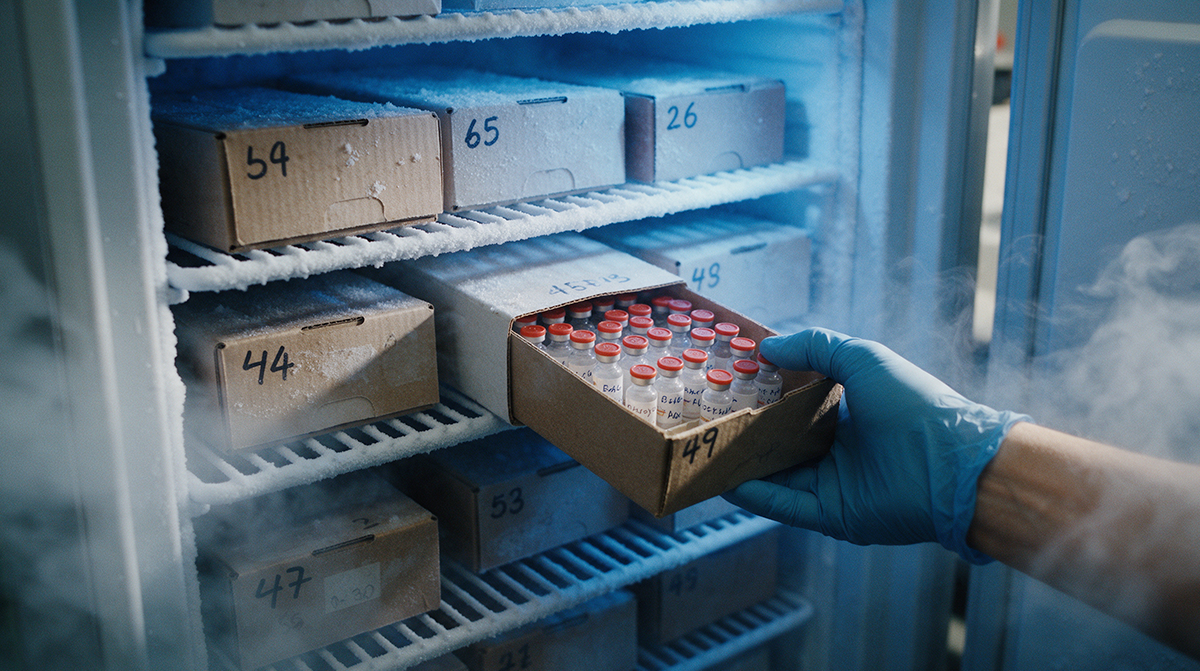
Seven hundred blood samples, drawn across Germany in the first half of 2026 by doctors asked to sample broadly rather than selectively, plenty of them from people with no complaints at all. Roughly 66 percent came back positive for circulating spike protein.
That number did not lead anybody’s bulletin. What led the bulletins was Anthony Fauci, the released diaries, the DEFUSE proposal, and a lab leak hypothesis now sitting on a White House webpage as the most probable account of where SARS-CoV-2 began. Six years of being called a conspiracy theorist for saying so is being quietly conceded in public.
And there are still sick people. There is still a virus circulating. Almost nobody is counting what it is doing to them.
Why Vindication Changed So Little
Dr. Shankara Chetty, a general practitioner in Port Edward, South Africa, is still fighting a court case over statements classified as misinformation in 2021. The material now being released would settle most of it. His own witness list assembled the same evidence three and a half years ago.
So why surface it now? A scapegoat closes a file. It does not treat a patient. The awkward arithmetic is that the man who funded the work most likely to have produced the virus was then handed the job of managing the response to it, and nobody in the room seemed to notice that those were the same person. Being right about that in 2026 helps precisely nobody who is currently unwell.
What Went Missing When Omicron Arrived
Every variant up to the end of 2021 carried a feature on the spike that set off violent hypersensitivity reactions: mast cells firing, immune systems overshooting, the day-eight crash that clinicians learned to anticipate and treat. When Omicron arrived, that trigger went quiet. Emergency departments emptied. Europe filled up with people deliberately catching it to collect an antibody certificate.
The trigger was one feature among several, and the others stayed. Compare pre-Omicron spike with Omicron spike and the furin cleavage site works better, not worse. The amyloidogenic stretches that seed microclots and neurological trouble are still there. So is DC-SIGN binding, a trick out of the HIV playbook that lets virus use spike to enter immune cells directly. So is a superantigen motif, a structure that sat in bioweapons research in the 1960s and does nothing gentle to a human immune system. And SARS-CoV-2 potentially replicates inside our gut bacteria, which no other coronavirus manages, giving it a reservoir to hide in and refill from.
What changed was the noise, not the mechanism. Severe immune dysregulation gave way to milder dysregulation that persists far longer.
The Three-Week Gap
Here is the clinical shape of it. A patient gets a mild viral illness. Three weeks later they have a major cardiac or neurological event. Nothing on the chart links the two, so nobody links them either.
Chetty puts the long view plainly: “The virus doesn’t have the potential to harm you like it did immediately, but it does have the cumulative potential with reinfection to shorten your lifespan.”
That changes what recovery has to mean. Not back at work. Back to one hundred percent of what you were before the infection, with nothing persisting and nothing quietly worsening. The next exposure is coming, and it will start from wherever the last one left you.
Nine Thousand Samples, And A Doubling
The larger dataset runs to 9,286 blood samples, sent to the MMD laboratory in Germany by clinics and individual doctors. Each was analysed for spike in three compartments: free in serum and plasma, packaged inside exosomes, and lodged in immune cells such as monocytes and macrophages. The exosome results carry more weight than the raw positivity rate, because an exosome means a cell somewhere is making the protein right now.
Set 2026 against 2025 and positivity has roughly doubled in twelve months. Age tells the same story. Fewer than 40 percent of samples from people in their twenties came back positive, against close to double that figure from age 40 upward. Six years into the pandemic, the curve points the wrong way.
Two caveats belong on that finding. These samples came in from doctors rather than from a random population survey, so the sicker end of the spectrum is over-represented by design. And other groups measuring spike antigenaemia have failed to link it to persistent post-COVID illness. The measurement itself holds up. What it means stays genuinely open.
The proposed mechanism is not exotic. Coronaviruses build double membrane vesicles inside infected cells, small bunkers where viral RNA sits protected. Replicable virus disappears. The template does not, and spike gets synthesised from it in slow instalments. Spike itself cannot linger in blood for more than a day, because binding to cells is its entire function. So finding it in circulation means production is ongoing somewhere upstream.
The Panel Nobody Orders
Perhaps 12 to 15 percent of Western populations sit in what the German group calls the shadow population: not acutely ill, not well, cycling through reinfections and losing ground. These patients come back from cardiology with normal results and a shrug, because the standard panel was never designed to look for any of this. Measure spike, microclots, specific inflammatory markers and neuromarkers instead, and a different patient appears on the same blood draw.
The risk arithmetic makes the case for bothering. Roughly one in ten first infections produces one or more long COVID sequelae. After a second infection, that figure moves past one in four. Nobody has had more reinfections than the Omicron generation, and nobody has stratified them by blood group, genetics, or clotting versus neurological phenotype, because the premise that ongoing infection still causes harm has not been accepted.
There is a precedent for how this ends badly. Fibromyalgia and chronic fatigue were waved down the corridor for thirty years because they had no code and no test. A patient can be dismissed that way. A cohort this size cannot.
The Population-Level Signal
Something is happening to immune competence more broadly. Candida auris, mycoplasma pneumonia, cyclospora, salmonella, meningitis and measles are all rising together, which looks like a population losing immune function rather than a run of unrelated outbreaks. Any clinician managing HIV recognises the shape of it: opportunistic infections track CD4 counts and arrive as defences fall. Paediatricians report children who used to be ill once or twice a year now ill six or seven times.
Where this reading breaks from mainstream epidemiology is on cause. Falling MMR coverage remains the standard explanation for measles resurgence, and it is well supported. Immune suppression across a whole population would produce a similar curve. Both can be true at once, and only one of them is currently being measured.
The Part That Is Not Science
The obstacle is not evidence. It is narrative, and it has captured both camps. One camp maintains that nothing is wrong. In the other, some of the loudest vaccine critics have decided that infection is harmless, or that there was never a virus at all, which lands them defending the same conclusion as the people they distrust.
“I’m unvaccinated. I have no chronic conditions, and on the eighth day with Omicron, twice, for the first time in my life I ended up in ICU,” said Chetty.
Ideology is a poor differential diagnosis.
Three things would move it, and none of them is expensive. Health agencies could measure immune competence in children directly, instead of attributing every childhood infection curve to vaccine hesitancy. Funders could pay for the work that separates vaccine-derived spike from viral spike. It is technically straightforward, and nobody is paying for it. Researchers could stratify the reinfection cohort by risk phenotype, so treatment gets ahead of events instead of arriving three weeks late.
Whether a laboratory built this virus is a retrospective question, and the courts will grind through it. What the virus is still doing to two thirds of the population is a prospective one, answerable this year by anybody willing to run the right blood test.


I have been spreading the word about Omicron for over a year, and the mutation/mutations that are more aggressive and generate chronic diseases that lead to death in those who are diagnosed, but they do not specify this killer variant, reproduced by Covid 19 ½.
More specificity with respect to blood panels would be helpful, no?