Dr. Philip McMillan, John McMillan
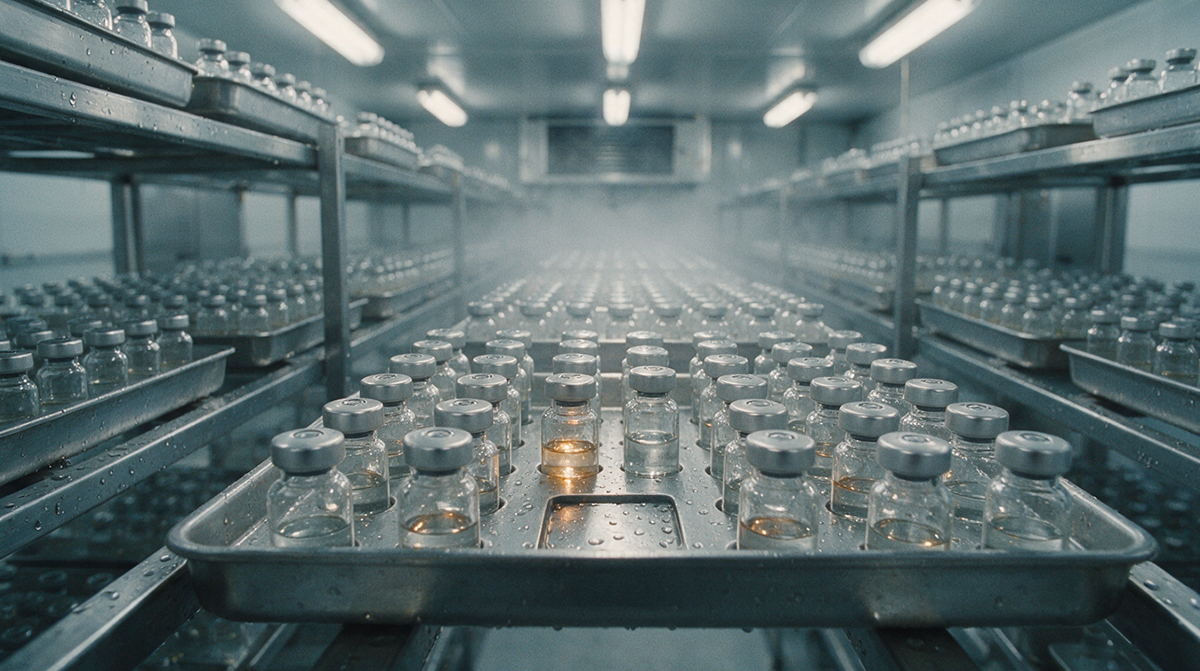
Eight billion doses of mRNA Covid vaccine have gone into arms worldwide since 2020, and no clear safety signal has emerged. That track record is now being used as the safety evidence for the platform itself, which lets new products built subsequently, skip regulatory work a genuinely novel technology would face. Moderna’s mRNA influenza vaccine is the first waved through on that logic.
In the trial that won the mRNA influenza vaccine approval in the United States, 102 people in the vaccine group died. In the comparison group, 97 died. Reviewers looked at those totals, judged them balanced, and moved on.
Break the totals apart and the tidiness dissolves. Deaths logged as cause unspecified ran 23 in the mRNA group against 9 in the comparator. Sudden deaths with no determined cause ran 29 against 12. Small absolute numbers, both of them, sitting inside a dataset that was otherwise read as reassuring.
“They didn’t autopsy these patients, and so we don’t know what this unspecified death is,” said Dr. Philip McMillan, a British physician and researcher.
No post-mortems were performed. The imbalance may be random scatter, the kind that appears in one large trial and vanishes in the next. It may also be the first visible edge of something the study was never built to detect. Both readings remain live. Neither was tested.
The Comparator That Was Left Out
The trial measured the mRNA shot against a standard-dose influenza vaccine. It did not measure it against the high-dose vaccine that clinicians actually give to adults over 65, the very population enrolled. The FDA had already raised this with the company, and the disagreement over how the trials were conducted predates the approval.
That omission travels through everything downstream. Enhanced and high-dose formulations exist because older immune systems respond weakly to a standard dose. Testing a new product against the weaker option and reporting a win says less than it appears to. Whether this vaccine outperforms the shot older adults are already receiving is unknown, because the experiment was never run.
What 26.6 Percent Actually Buys
The reported efficacy was a 26.6 percent reduction in laboratory-confirmed influenza-like illness compared with the standard dose. Set that against the raw counts and it reads differently.
Out of 10,000 vaccinated, the mRNA group recorded 204 cases, or 2.04 percent. The standard-dose group recorded 2.77 percent. The gap is 73 fewer illnesses per 10,000 people. Converted to a per-person figure, roughly 137 people must receive the mRNA vaccine for one additional case of flu-like illness to be prevented. Not one case in either group was fatal.
So what does a 26.6 percent improvement actually feel like to the person rolling up a sleeve? For 136 of every 137 of them, it feels like nothing at all.
Anyone who lived through 2021 has met this arithmetic already without recognising it. “Ninety-five percent effective” was heard by most of the public as a near-guarantee of personal protection from Covid vaccines. It described a relative reduction across a whole population, which is a very different creature. A relative percentage can look enormous while the absolute benefit to any single person stays tiny. No sleight of hand is involved. It is how the statistics behave, which is exactly why the framing chosen for a press release deserves as much scrutiny as the trial behind it.
An Immune System Pushed Hard
On antibody response, the mRNA vaccine performed well. It generated higher titres against all four influenza strains than even the high-dose comparator in adults over 65, measured 29 days after vaccination. Stronger response, better protection: the logic seems to follow neatly.
The reaction data complicates it. Any reported reaction occurred in 75 percent of mRNA recipients against 46.7 percent for the standard dose. Injection site pain, 65 percent against 29.8. Fatigue, 45 against 20. Headache, 37 against 18. Muscle aches, 35 against 11.6. Severe systemic reactions, 5.5 percent against 0.9, more than five times the rate. Serious adverse events, 2.2 against 1.9.
A profile like that points toward a dose set high enough to hyperstimulate the immune system, chosen because a strong antibody signal is what a trial needs to show. The same pattern was visible through the COVID vaccine rollout. Watch what the field is quietly doing next: the shift toward smaller mRNA particles, engineered to produce antibodies without provoking as much immune reaction, looks a great deal like an admission that the current dose is hard to defend.
The Studies That Were Never Done
Grasping the next concern requires understanding a bit of anatomy. The genetic instructions in an mRNA vaccine travel inside a lipid nanoparticle, a fatty sphere a few tens of nanometres across. Its outer surface carries cholesterol and PEGylated lipids, which shield the package from immediate immune destruction. Inside, ionizable lipids hold the mRNA and release it once the particle reaches the interior of a cell.
Those ionizable lipids are the open question. When they carry a charge, they can bind to proteins and change their shape, forming what chemists call an adduct. A protein wearing an adduct can be read by the immune system as foreign. Adducts also carry recognised carcinogenic potential. Regulators know this class of problem well. Zantac was pulled from the market over NDMA, a nitrosamine impurity, different chemistry entirely, but the same hard lesson about reactive molecules quietly forming compounds nobody planned for.
Adduct studies are standard practice for gene-related products. They were not performed here. The product labelling states plainly that carcinogenesis, mutagenesis and impairment of fertility have not been evaluated.
As Dr. Philip McMillan put it: “mRNA vaccines have avoided that not because of the technology but simply because they were labeled as a vaccine.”
A category decided which safety work was required, and the chemistry had no say in it. That is a labelling choice with toxicological consequences, and it can be reversed the moment a regulator decides to reverse it.
The Price Of A Marginal Gain
Now the money. In the United States a standard-dose flu shot runs about $21. The cell-based version is $44. The enhanced formulation given to over-65s is $86. Moderna’s mRNA vaccine is $129.
Six times the cost of the standard dose, for a benefit measured against that same standard dose rather than the enhanced one. Run the per-case arithmetic and the extra spend works out to roughly $14,800 for every flu case prevented, none of which proved fatal in the trial.
Line the findings up together: a small absolute gain, a side effect profile several times heavier, an unexplained cluster of undetermined deaths, an entire class of toxicology study skipped, and a sixfold price rise. As a scientific case it is thin. As a commercial one it holds together rather well. A company whose cancer pipeline has yet to reach a market needs its platform on the national immunisation schedule to survive, and a very large American investment fails if it does not. Motive cannot be read off a price list. What the numbers do show is that the clinical justification is the weaker of the two available explanations.
Where This Is Heading
Return to where this started. Absence of a finding is being treated as evidence of absence, and the distance between those two things is precisely where the risk lives. Every gap in this trial sits inside that distance.
Follow the pattern forward and most vaccines get rebuilt on mRNA, until the choice available to a patient narrows to taking the mRNA version or taking nothing at all. That is an enormous public health decision, arrived at through procedural steps, none of which was ever put to the public.
None of this demands the conclusion that the vaccine is dangerous. It demands that the questions be asked out loud, by regulators, in public, before the platform becomes the only thing left on the shelf. Autopsy the unexplained deaths. Run the adduct studies. Test the product against the high-dose vaccine older adults actually receive. Until that happens, the honest description of Moderna’s mRNA flu shot is a product approved on evidence nobody has bothered to gather.


As someone who is quite senior, and decided to not get jabbed when all of this first started, I am now convinced that the most deliberate danger to my health and longevity is the American health care establishment.
Thank you for the article. It seems the more light is shone on this sort of thing, the more horrific it becomes.
They are in the process of stealing our real estate, tax and pension funds and funnelled the money to the elites. In addition, they are trying to kill the older population and make permanent income streams out of our children. When will people wake up??? What is it going to take?????