Dr. Philip McMillan, John McMillan
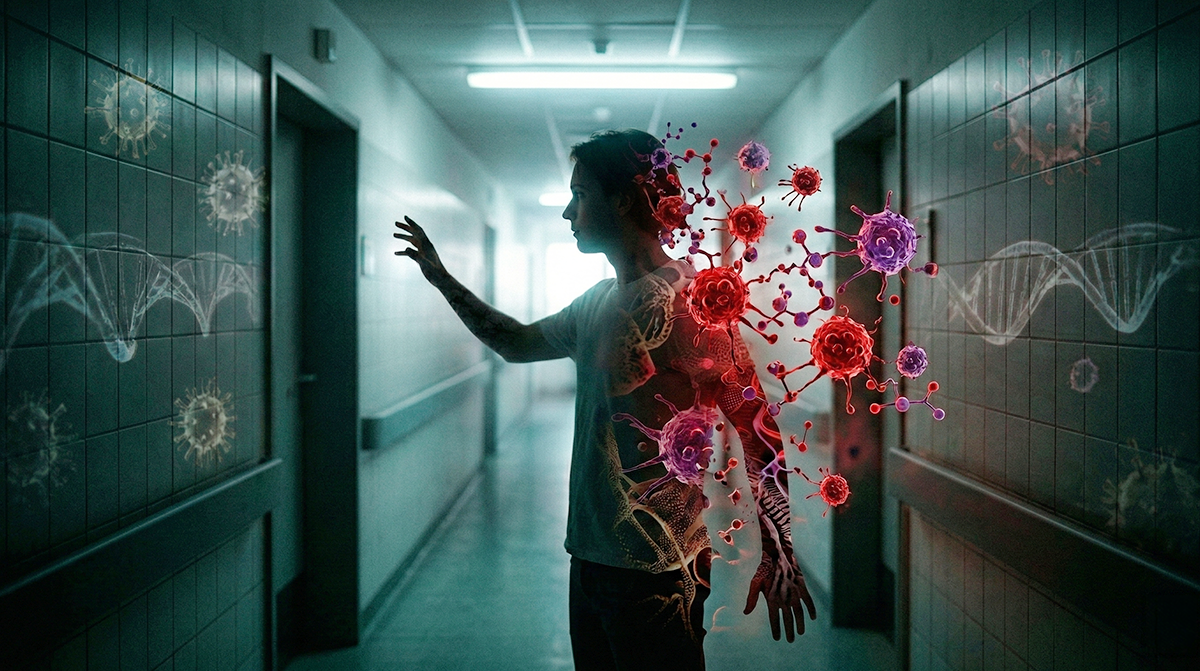
Something is happening with cancer, and it’s getting hard to look away.
In Australia, a 35-year-old woman named Jessica spent a year being told she was too young for cancer. Doctors suggested a stomach ulcer. It wasn’t until she was admitted to hospital that they found a 13-kilogram tumour, the size of a watermelon, wrapped around her ovary. They removed the mass along with her right ovary and fallopian tube. Testing revealed an exceptionally rare form of ovarian cancer. Her plea to other young Australians was blunt: “Hear us, you know, really hear what we’re saying and push for further testing because that could be the difference between being diagnosed in stage one or stage three and four.”
Jessica’s story, heartbreaking as it is, is no longer unusual. Across every major cancer registry in the developed world, the same unsettling signal is flashing: cancer is increasing in younger people, and the cancers they’re getting are often more aggressive. In Australia, ovarian cancer in young adults is up 30 percent. Breast cancer, 50 percent. Bowel cancer, a staggering 71 percent. Prostate, pancreatic, and liver cancers are all climbing too. American Cancer Society data from January 2025 found that cancer incidence in women under 50 is now 82 percent higher than in their male counterparts, up from 51 percent in 2002. A 2024 study in *The Lancet Public Health* found rising rates in younger adults across 17 of 34 cancer types examined, including nine that had previously been declining in older generations.
So is this just a post-pandemic hangover, the predictable fallout from years of missed screenings? That explanation holds some water, but only up to a point. During 2020 and 2021, routine cancer screening fell off a cliff. Delayed diagnoses would naturally create a bump in detected cases once services resumed. That logic tracks through about 2022. Beyond that, the numbers should have normalised. They haven’t. Nordic cancer registry data (Nordcan) for Denmark, looking at both sexes aged 40 to 49, shows cancer incidence in 2023 and 2024 reaching the highest levels recorded since 2010. That’s not a screening backlog. That’s a trend. And it demands a mechanistic explanation.
Cancer as Immune Failure
To understand what might be going wrong, you have to start with what usually goes right. The human body is, in a sense, always flirting with cancer. Cells mutate constantly through errors in replication, damage from oxidative stress, and exposure to carcinogens. Under normal circumstances, the immune system catches these rogue cells and eliminates them before they can gain a foothold. Cancer, at its most fundamental level, represents a failure of this surveillance system.
Think of it as a layered defence. General health, exposure to toxins, certain infections, and genetic predisposition all play a role in determining how well those layers hold. But immunity sits at the base. If that foundation cracks, the whole structure becomes vulnerable. This is why some researchers, including those in Russia, are now exploring vaccines designed to bolster the immune system’s ability to fight cancer directly, because a well-functioning immune system is the single best defence any of us have.
The recognised lifestyle risk factors, including poor diet, obesity, inactivity, smoking, and excessive UV exposure, are real. Around five in ten cancers are theoretically modifiable through addressing these factors. But here’s the uncomfortable reality: those risk factors haven’t materially changed in a way that would explain the sharp, sudden uptick in young-onset cancers. Something else is in the mix.
Enter CD147
A paper published in early 2026 in *Signal Transduction and Targeted Therapy* may offer a critical piece of the puzzle. Titled “Inducible CD147 up-regulation boosts extended SARS-CoV-2 infection triggering severe COVID-19 independent of ACE2,” the study demonstrated something researchers had suspected but hadn’t confirmed: SARS-CoV-2 infection doesn’t just use the CD147 receptor as an entry point. It actively upregulates it. The virus, in other words, doesn’t merely walk through the door. It installs more doors.
CD147, also known as Basigin or EMMPRIN, is a transmembrane glycoprotein expressed across a wide range of tissues and already well-established in cancer biology. It is upregulated in most tumour types and plays a central role in stimulating the production of matrix metalloproteinases (MMPs), enzymes that degrade the tissue scaffolding around cells and clear a path for tumour invasion and metastasis. CD147 is already known to be significantly overexpressed in breast cancer, lung cancer, kidney cancer, and lymphoma compared to corresponding normal tissues.
What makes the 2026 finding so concerning is the nature of CD147’s role. It functions as what researchers describe as a “metabolic enabler.” Specifically, it assists in transporting the proteins that shuttle lactate, a metabolic waste product, out of cancer cells. Cancer cells are metabolic outlaws; they burn through glucose at a ferocious rate via a process known as the Warburg effect, producing vast quantities of lactate in the process. If that lactate can’t get out, the cell poisons itself. CD147 helps keep the escape hatch open.
So when SARS-CoV-2 infection drives CD147 levels higher, the implications for patients harbouring existing tumour cells are deeply troubling. Those cells gain enhanced metabolic support. They become better at exporting waste. And the surrounding immune environment becomes more permissive for tumour survival. As Dr. Philip McMillan has argued, “this upregulation of CD147 means that tumour cells that already have CD147 will not only increase the risk of persistent infection, but they will increase the risk of spread because of the mechanisms that are being used to handle the spread of disease and virus.”
The Compounding Effect
CD147 upregulation alone would be worrying enough. But it doesn’t operate in a vacuum. There is a growing body of research examining how repeated exposure to the SARS-CoV-2 spike protein, whether through infection, immune-modulating interventions, or both, may be disrupting the immune system in ways that compound cancer risk.
Among the most discussed mechanisms is IgG4 class switching. Under normal immune function, the body produces IgG1 and IgG3 antibodies, potent, pro-inflammatory subtypes that can tag cancer cells for destruction through processes like antibody-dependent cellular cytotoxicity (ADCC). Research has shown that prolonged or repeated antigen exposure can trigger a shift toward IgG4, a subtype that is far weaker at activating immune effector cells. A 2024 paper in *Exploration of Immunology* laid out the hypothesis plainly: increased IgG4 concentrations could allow certain cancers to grow by blocking the activation of the very immune cells meant to kill them.
Other proposed disruptions include macrophage dysregulation, where the immune system’s first responders become less effective, and interferon suppression, which blunts the body’s early-warning antiviral and antitumour signalling. When you stack these immunological factors on top of one another, and then layer in the traditional modifiable risks like processed food, sedentary lifestyles, and environmental toxins, the picture starts to look less like a coincidence and more like a convergence. Or, as Dr. Philip McMillan has described it, something close to a perfect storm for cancer.
It’s worth being honest about what we don’t know. These are mechanistic hypotheses with supporting evidence, not settled science. The relationship between CD147 upregulation, immune disruption, and real-world cancer incidence in individuals is complex and will take years of epidemiological work to fully unravel. But the patterns in the data are difficult to dismiss. And the biological plausibility of the proposed mechanisms is strong enough that they deserve rigorous, dispassionate investigation.
Why This Matters Now
The longer it takes to understand what is driving these trends, the harder it will be to do anything about them. Cancer caught early is treatable. Cancer driven by mechanisms we refuse to examine is not. The Nordcan data, the Australian statistics, the American Cancer Society reports: they’re all telling the same story. Something changed. The question is whether the medical and scientific establishment can resist the pull of politics long enough to figure out what.
This is not an issue that belongs to one ideological camp. Everyone has a body. Everyone has an immune system. And everyone stands to benefit from honest, unflinching inquiry into why cancer appears to be accelerating in people who should be in the prime of their health. The path forward is investigation: thorough, unemotional, and grounded in mechanism. Ignoring the question, as one researcher recently noted, does not make it disappear.
—

Thanks for sharing this timely information Dr McMillan 🙏