Dr. Philp McMillan, John McMillan
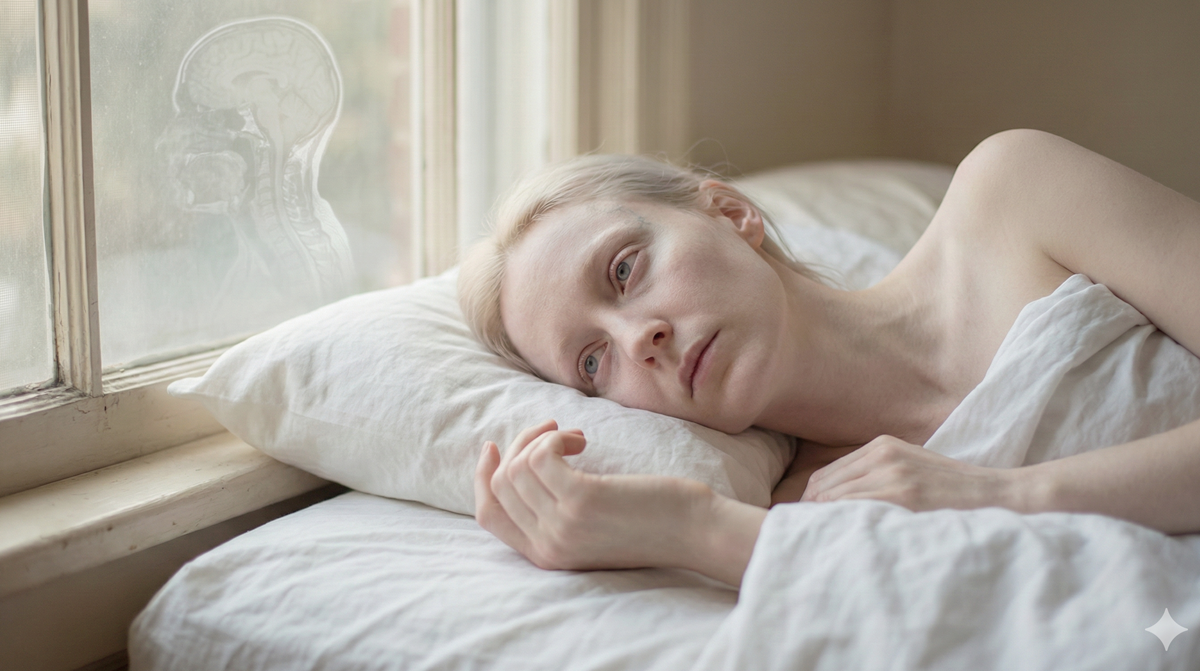
There is a particular kind of silence that settles over an examination room when a doctor has run out of explanations. The patient sits on the table, symptomatic and suffering, while the clinician pages through test results that stubbornly refuse to reveal anything wrong. Blood work: normal. Imaging: unremarkable. The easy conclusion, that the illness must be psychological, hovers in the air, unspoken but understood.
Dr. Shankara Chetty, a general practitioner in the coastal town of Port Edward, South Africa, has seen this scene play out countless times since 2020. A trained biologist turned family physician, Chetty treated over 14,000 COVID patients during the pandemic using a hypothesis-driven approach that combined steroids and antihistamines. This intervention was born from his observation that severe illness often represented an allergic-type hypersensitivity rather than viral pneumonia alone. Now, in early 2026, he finds himself navigating what he and British physician Dr. Philip McMillan describe as a medical landscape that has fundamentally shifted beneath everyone’s feet.
“There are too many variables that were pushed out of place during the pandemic for us to ever settle again,” Chetty observed in a recent discussion with McMillan. The desire to treat COVID-19 as a finished chapter, a crisis survived and a page turned, runs deep. Governments have moved on. Public health messaging has quieted. The population, understandably exhausted, wants nothing more than to believe the danger has passed. But wanting something to be over, Chetty argues, does not make it so.
The Neurotropic Shift
The clinical picture that emerges from practices like Chetty’s bears little resemblance to the COVID of 2020. The Omicron variants circulating today are neurotropic. They have an affinity for nervous tissue that earlier strains did not possess. Patients no longer present with the classic viral syndrome of cough, fever, and respiratory distress. Instead, they arrive complaining of headaches, fatigue, and a strange malaise that seems to come from nowhere. Some describe a fiery sore throat so severe they cannot swallow, yet physical examination reveals no redness, no inflammation, nothing to explain the pain. The symptom is neuralgic rather than pathological, a nerve misfiring rather than tissue damage.
This creates a diagnostic puzzle of extraordinary difficulty. When the presenting symptoms are phantoms, real to the patient but invisible to the examining physician, the entire framework of modern diagnosis begins to falter. Chetty has learned to trace symptom timelines backward, sometimes two or three years, searching for the triggering event. A brief illness dismissed at the time. A vaccine dose that preceded the onset of problems. The patterns are there, he insists, but only if you know to look for them.
Breaking the Cycle
Consider the case that walked into Chetty’s clinic: a man presenting two years after his second Pfizer vaccination with constant twitching, localized to his head and face. For an hour-long consultation, the patient sat on the examination table convulsing while his wife provided the history. He had undergone every test imaginable (MRIs, EEGs, the complete diagnostic workup) and nothing had helped. Nothing had even explained what was happening.
Chetty approached the problem through the lens of immune dysregulation. If the vaccines triggered a hypersensitivity response to spike protein, and if that response had become self-perpetuating, then the treatment had to address both the immune activation and the clotting abnormalities that accompany it. Both had to be addressed simultaneously. Breaking one end of the cycle while ignoring the other simply allows the process to re-trigger.
Within a week, the patient had improved by 95 percent. Then Chetty reduced the medication, watching for rebound, and found it. By the second and third weeks, the man had deteriorated to about 60 percent of baseline. The lesson was clear: longstanding illness requires extended treatment courses to maintain what Chetty calls immunological “remission.” The seizures, the gut dysfunction, the constellation of seemingly unrelated symptoms were all expressions of what a dysregulated immune system can produce when it turns against the body’s own tissues.
The Protocol Trap
For clinicians trained in protocol-driven medicine, this represents an impossible situation. A physician watching patient after patient present with genuine suffering and normal test results faces a choice that feels like professional suicide: either tell the patient nothing is wrong (a lie) or venture outside the guidelines into territory where no established roadmap exists.
Chetty’s view on this is unsparing. “You don’t tell a patient there’s nothing wrong with them,” he said. “The patient came to you because there’s something wrong with them. You got to swallow your pride and say, ‘I’m not sure what’s wrong with you.’ And then find someone who can help you find what’s wrong with that patient.”
The problem, of course, is that finding someone who can help has become its own challenge. Medical schools are not teaching the pathophysiology of post-COVID illness or vaccine-related injuries. Not because they lack the knowledge, Chetty suggests, but because acknowledging the problem requires accepting responsibility for decisions made during the pandemic. The result is a generation of physicians trained to follow protocols that were designed for diseases that no longer present the way they once did.
The Stepwise Decline
McMillan has developed a model for understanding what happens to patients caught in this limbo. The progression moves in stages: persistent infection gives way to immune dysregulation, which smolders into chronic inflammation, which eventually produces metabolic collapse (diabetes, thyroid dysfunction, the systemic unraveling of regulatory systems) before finally reaching end-stage organ failure. Each patient moves through these phases at a different rate, determined by genetics, lifestyle, vaccination status, and the cumulative burden of reinfection.
The excess mortality that both physicians observe manifests not as a single recognizable pattern but as a diffuse signal. Strokes in middle-aged adults. Cardiac arrests in twenty-somethings. Dementia appearing decades early. Autoimmune diseases proliferating. Because these deaths do not look the same, the population fails to connect them. A young woman dies in her sleep twelve days after a mild COVID infection. A man develops inexplicable seizures. An athlete collapses on the field. Each case is treated as isolated misfortune rather than evidence of a shared underlying mechanism.
“It’s a strange war,” Chetty reflected. “The shots were fired. We’re waiting for the victims to fall.”
The Year Ahead
What does 2026 hold? More of the same, both physicians agree. Only more so. The numbers will climb. The narratives that insist COVID is behind us will buckle under accumulating evidence. But the population, they predict, will continue to hope for the best, because the alternative requires accepting truths that feel unbearable.
Pain, Chetty believes, remains the only reliable catalyst for change. People respond to fear, not logic. The awakening will come when enough individuals find themselves or their children unexpectedly, inexplicably ill, when the neighbor’s problem becomes personal. Until then, medicine remains trapped between what it knows and what it is willing to say.
The question that lingers is not whether a reckoning will come, but whether it will come in time to matter.
So, what can be done? The good doctors are miles away from anywhere. How does anyone in say, California, get help? This is all alarming and I’m seeing cancer more than anything else. I’m in the Bay Area and there a few good doctors who were treating Covid before the roll out with great success but you don’t seem to know each other. How do I get a doctor to get a hold of your treatment strategy?
https://imahealth.org/cancer-resource-hub/
Incredible thank you for these profound newsletters.