Dr. Philip McMillan, John McMillan
Are people just getting sicker? Not in the abstract, population-health-textbook sense, but in the blunt, year-on-year, trolleys-stacked-in-corridors sense that emergency departments across the United Kingdom are now documenting in cold numbers? That is the question at the heart of the January 2026 NHS England statistical commentary on accident and emergency attendances and admissions, and it is a question that, according to Dr. Philip McMillan, a researcher and clinician who has been tracking these trends for years, nobody in authority seems willing to confront.
The numbers, on their own, tell a story that is hard to argue with. What they mean, and what should be done about them, is where the argument begins.
The Surge at the Front Door
To make sense of the data, a quick orientation helps. The NHS operates three types of emergency departments. Type 1 is the classic A&E: consultant-led, round the clock, full resuscitation facilities. Type 2 covers specialist units like ophthalmology and dental. Type 3 facilities are GP-led urgent treatment centres, open at least twelve hours a day, which treat less acute cases and refer the sickest patients upward into Type 1.
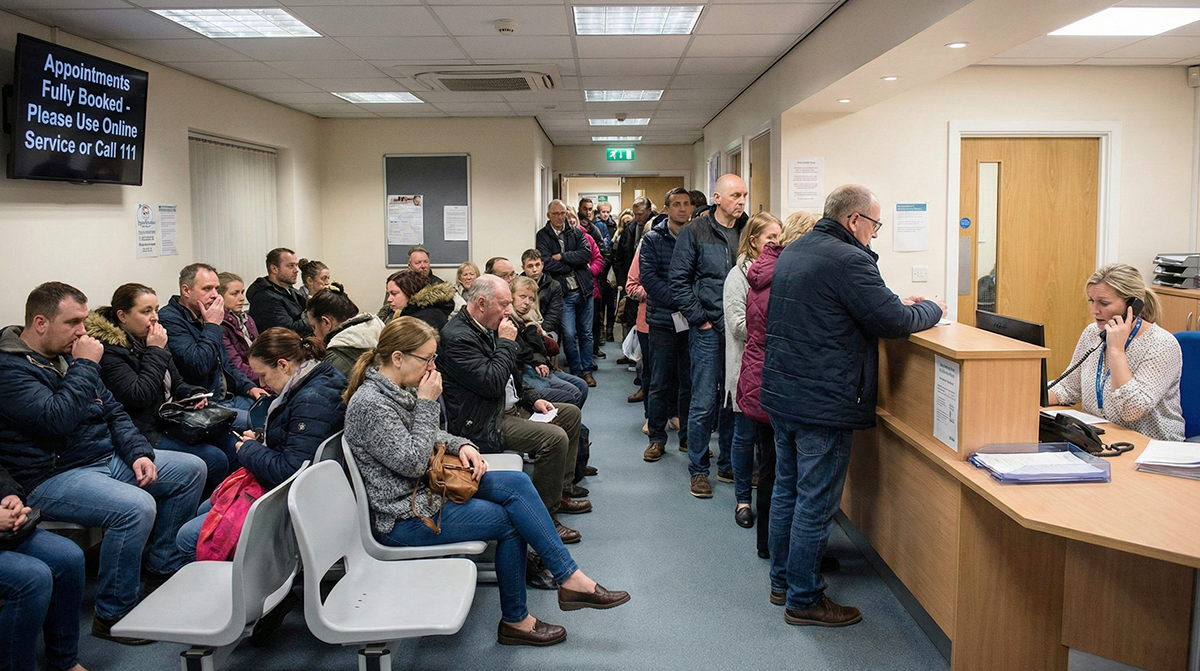
Across all three types, total attendances in January 2026 were 4.6 percent higher than in January 2025. The picture worsens when you isolate the major emergency departments: Type 1 attendances climbed 5.6 percent year on year. Even Type 3 centres, the lower-acuity front line, saw a 3 percent rise. That last figure matters more than it might seem. Because urgent treatment centres act as a filter, referring their sickest patients into the major hospitals, a rise in Type 3 traffic is a barometer of how much illness is circulating in the community before it ever reaches a resuscitation bay.
Over the most recent three-month window, Type 1 attendances were running 2.3 percent above the same quarter the year prior. The trend line is climbing. The question is what is driving it.
The Admission Paradox
Here the statistics throw up a counterintuitive wrinkle. While more people are turning up at emergency departments, fewer are being admitted. Overall emergency admissions fell 0.5 percent compared to January 2025. In Type 1 departments specifically, admissions dropped 1.2 percent.
On paper, that might sound like good news. It is not. What it describes is a population unwell enough to seek emergency care, often because they cannot get a GP appointment, but not so acutely ill that they need a hospital bed. They are assessed, treated or reassured, and sent back into a community with little capacity to help them. The effect is a revolving door that adds pressure without producing any lasting resolution.
Gridlock Behind the Waiting Room
For those who are sick enough to be admitted, the picture is grimmer still. The NHS uses a four-hour target: once a clinician decides a patient is too unwell to go home, the clock starts, and that patient should be in an inpatient bed within four hours. Delays against this target rose 1 percent from January 2025. A modest-sounding number, until you understand that it reflects hospitals that are simply full.
The truly alarming figure sits one line further down. Twelve-hour delays from the decision to admit surged 16.2 percent year on year. Nuffield Trust data confirms that over 70,000 patients waited more than twelve hours for a bed in January 2026, the highest number on record. On the ground, that means patients on trolleys in corridors and assessment bays, sometimes for the better part of a day, because there is no ward bed to move them into.
The reason is itself a cascade. Medically fit patients, already admitted to hospital, who should be discharged are stuck, waiting for community support packages, care home places, or social care that does not exist in sufficient quantity. If patients are not flowing out the back door, the entire hospital backs up. As Dr. McMillan put it: “It’s almost like being constipated. If you don’t move stuff out when you eat, it will eventually make you sick because it can’t move through the intestine. We need that flow through in hospitals in order to be able to have capacity for patients to come into new beds and be managed.”
The Collapse of Community Care
So why are so many people bypassing their GP and heading for A&E? Because their GPs are overwhelmed. More people in the community are chronically ill, often with overlapping conditions, many linked to post-COVID syndromes for which no clear treatment pathway exists. Patients ring for appointments that are weeks away. They deteriorate. They go to A&E because it is the only door still open.
There is no coordinated national plan for managing the chronic illness burden that has accumulated since 2020. The emergency departments are not failing in isolation; they are absorbing the failures of every layer of healthcare beneath them.
The “COVID Storm” Hypothesis
One interpretation ties this population-level deterioration to what Dr. McMillan calls the “COVID storm,” the ongoing circulation of SARS-CoV-2 in broadly vaccinated populations. The argument is specific: when a vaccine-primed immune system encounters reinfection, the resulting inflammatory response can potentially produce outcomes worse than natural infection alone. Under this analysis, Covid vaccination campaigns were too broadly applied and should have been targeted at the highest-risk groups and the previously uninfected.
A large Danish national cohort study published in The Lancet Infectious Diseases in early 2025 (Bager et al.), covering nearly six million residents from May 2022 to June 2024, adds weight to concerns about ongoing COVID severity. That study found COVID-19 hospital admissions were twice as frequent as influenza admissions, with a death rate more than three times higher. The 30-day mortality risk for hospitalised COVID patients (even with just a positive test within two weeks prior to admission) was 23 percent above that for influenza, with excess deaths concentrated between days 12 and 30, suggesting a delayed systemic toll rather than acute respiratory failure.
This is contested territory. As Dr. McMillan acknowledged: “Some people may disagree with my perspective on risks of broad population Covid vaccination with this. And that’s fine. But you have to look at the outcomes that we are facing now, because they still need to be addressed.” The broader point stands regardless of where one lands on vaccination policy: climbing attendances, gridlocked wards, and the chronically ill accumulating in a system with nowhere to put them demand a reckoning.
A Dire Prediction
There are no quick fixes here. Governments cannot conjure care home beds or social care packages out of thin air. But if the trajectory is at least acknowledged, if health planners accept that this pressure will keep building month on month, year on year, there is room to deploy limited resources more creatively and to plan rather than simply react.
The forecast from this analysis is bleak: by 2027, conditions will be measurably worse. Western countries with high vaccination coverage may be seeing variations of the same pattern: a steadily sicker, more frail population straining healthcare infrastructure never designed to absorb this kind of sustained, compounding pressure.
What these January 2026 numbers show is not just a busy month in the NHS. They show a system in which every link, from GP surgeries and urgent treatment centres to inpatient wards and discharge services, is under simultaneous stress. For patients sitting in waiting rooms or lying on trolleys, this is not a personal failure. It is a systemic one. And until it is named as such, the chances of doing anything meaningful about it remain slim.



0 Comments