Dr. Philip McMillan, John McMillan
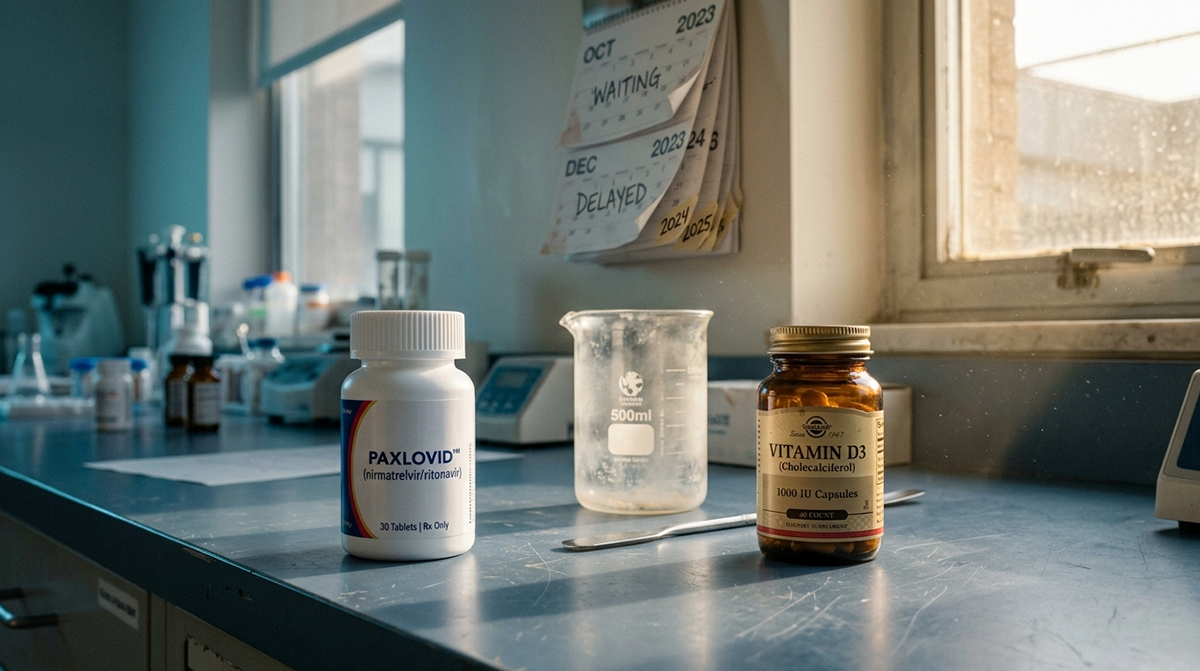
In April 2026, a randomized controlled trial published as “Oral Nirmatrelvir-Ritonavir for Covid-19 in Higher-Risk Outpatients” by Butler and colleagues finally answered a question that should have been asked four years earlier. The drug, now sold under the brand name “Paxlovid”, did not lower the chance of hospitalization or death in vaccinated, high-risk patients with COVID-19. The safety picture was equally uncomfortable: about 96 of every 100 patients in the trial reported some kind of side effect, and roughly one in ten of those effects were classified as serious. By the time the trial reported, the antiviral had already generated over $20$ billion in global sales.
Numbers like these change the conversation. They also change the next question: If a drug distributed at this scale failed to help the very group it was being prescribed to, where was the science that should have predicted that result? And what was the cheaper, simpler option that never received the same attention?
How a drug for one population was given to another
The trial design was straightforward. It compared Paxlovid to standard care in higher-risk outpatients, most of whom had received at least one COVID-19 vaccine, and counted hospitalizations and deaths in the 28 days following treatment. When the results came in, the antiviral group and the standard care group looked the same regarding the outcomes that matter most to patients and the healthcare system. The trial recruited the people who had actually been receiving Paxlovid in the real world and found no benefit.
This is not the same as saying the drug never worked. The original EPIC-HR trial, which won Paxlovid its emergency authorization in late 2021, recruited unvaccinated adults at high risk of severe disease and showed a striking drop in hospitalization. From that result, regulators and prescribers made a leap; they reasoned that if the drug worked in unvaccinated people, it must work in vaccinated people, too. No proper trial in vaccinated patients was conducted before that decision was made.
That assumption ignored a warning sign already visible in clinics. A noticeable share of vaccinated patients who finished a five-day course of Paxlovid experienced what doctors call “rebound.” The virus and the symptoms returned within days of finishing the pills. This pattern was much rarer in the unvaccinated group that defined the original trial. One way to interpret this is simple drug timing, that five days was simply too short for a body whose immune system was clearing the virus more slowly. A second reading goes deeper: researchers have described a shift called “IgG4 class switching” in people who have had several mRNA boosters. In plain terms, the immune system starts producing antibodies that “tolerate” the virus rather than fighting it. If parts of the vaccinated immune response are running slow or “soft,” a five-day antiviral aimed only at viral replication may simply hand the virus back its head start.
Severe COVID is an immune problem
There is a deeper issue the trial result exposes, and it is not really about Paxlovid. Severe COVID-19 in patients who end up in the hospital on oxygen is not primarily a problem of the virus copying itself; it is a problem of an immune system in overdrive, characterized by cytokine storms and micro-clots in the small vessels of the lungs. This is why the most reliable life-saving treatment of the entire pandemic turned out to be dexamethasone, a steroid that calms the immune response. As Dr. Philip McMillan, a researcher and clinician, noted on his Vejon Health channel: “This is because the primary mechanism with severe COVID-19… is immune or autoimmune related. This is why steroids work.”
By the time most vaccinated, severely ill patients reach the hospital, the virus has often already peaked. What is making them sick at that point is the body’s own immune response. An antiviral targets the wrong machinery at the wrong moment. A careful look at the biology would have flagged this concern in 2022. The concern was overruled, the drug was rolled out anyway, and a four-year detour followed.
The intervention that was already on the shelf
While that detour was running, a different option with a strong scientific case was sitting on the shelf. Surveys taken before the pandemic in the United Kingdom and the United States showed that more than four in every five adults had low or very low blood levels of vitamin D. Vitamin D, despite its name, behaves more like a hormone than a vitamin. It signals the body to produce cathelicidin and defensins, the body’s own broad-spectrum germ killers. It helps regulate ACE2, the same surface protein that SARS-CoV-2 uses to break into cells, and the wider hormone pathway that controls inflammation in the lungs. It also dampens the inflammation signals that fuel cytokine storms. Dr. McMillan flags one further antiviral effect: vitamin D blocks PAK-1, a step in the human cell that the virus uses to grow microvilli to spread more effectively.
The clotting story is its own argument. Some of the worst scenes of the early pandemic involved patients who could not be oxygenated even on a ventilator. The explanation from autopsies and imaging was consistent: very small blood clots scattered through the lungs. Low vitamin D is independently linked to higher levels of fibrinogen (the protein the body uses to form clots) and a higher risk of dangerous events like pulmonary embolisms or strokes. The link to a disease that kills through clotting was not a guess.
In spite of this, no early large-scale randomized trial of vitamin D as a COVID-19 treatment was ever conducted. Subsequent studies did show benefits later on, but the existing observational data showing that patients with low levels fared worse was repeatedly waved away as insufficient. Dr. McMillan summed up the contrast plainly: “Nobody, absolutely nobody, can give me a good scientific reason why if people were deficient in vitamin D during COVID, they should not have been given vitamin D supplementation.”
The mismatch and what readers can do
The mismatch is the part of the story that matters most. One option received four years of trial infrastructure, regulatory attention, and over $20$ billion of commercial effort, only to produce a negative result in the group that mattered most. The other received small studies and a strong biological case, but nothing close to a population-scale trial in a population already known to be deficient. The cost is not only the lives that supplementation might have saved but also the way the system is incentivized to react to the next pathogen.
Readers cannot fix the trial gap on their own, but they can act on the underlying biology. Ask a primary care doctor for a 25-hydroxyvitamin D blood test. The mainstream guideline target is a blood level above $30$ ng/mL ($75$ nmol/L). If the result is below that, supplementation, dosed and monitored by a clinician, is the next step. Treat vitamin D status the same way one would treat blood pressure or cholesterol: as a baseline reading worth knowing before the next respiratory winter. The April 2026 trial closed one chapter; the vitamin D question remains open.
References:
Oral Nirmatrelvir–Ritonavir for Covid-19 in Higher-Risk Outpatients



I remember when Paxlovid was developed (was it ?) and there was a study done between IVM and PAX – as both are 3-CL protease inhibitors but PAX contains 3 Fluoroatoms which during breakdown might become ionized and active = toxic. IVM on the other Hand is non toxic and the price is 5 USD to 900 USD. All (most) info on the internet is biased and lies like everything in the P(l)andemic. That it is now declared even worse than I initially thought is of no surprise because looking at the molecule and its probable metabolits is frightening.